 darin
darin Every dollar you save on taxes stays in your business. Small business owners across Canada who wait until tax season to think about their obligations typically pay more than necessary. Strategic tax planning throughout the year lets you keep more of what you earn while staying fully compliant with Canada Revenue Agency requirements.
Maximize your registered retirement savings plan contributions before year-end to reduce taxable income immediately. The contribution limit for 2026 allows most business owners to shelter significant earnings while building personal retirement security. Time these contributions strategically based on your income projections for the current year.
Track every eligible business expense throughout the year, not just at filing time. Home office costs, vehicle usage, professional development, and equipment purchases all reduce your taxable income when documented properly. Many small business owners miss thousands in legitimate deductions simply because they didn’t maintain adequate records.
Consider income splitting opportunities if your business structure allows it. Paying a reasonable salary to a spouse or adult children who genuinely work in your business shifts income to family members in lower tax brackets. The key is ensuring the compensation reflects actual work performed and market rates for those duties.
Review your business structure annually. Operating as a sole proprietor, partnership, or corporation each carries different tax implications. As your revenue grows, the structure that made sense at startup may cost you significantly more in taxes than necessary. Professional guidance helps identify the optimal timing for transitions that protect your bottom line.
Why Tax Planning Matters for Your Small Business
Many small business owners view tax planning as something only big corporations need, or worse, they mistake it for creative bookkeeping. The truth is simpler: tax planning is the legal, strategic practice of organizing your business finances to minimize your tax bill while staying fully compliant with Canadian tax law.
The financial impact of strategic tax planning can be substantial for small businesses. When you time your expenses properly, claim all eligible deductions, and make informed decisions about equipment purchases or retirement contributions, you can reduce your taxable income by thousands of dollars. That money stays in your business where it matters most.
Beyond the immediate tax savings, smart tax planning improves your cash flow throughout the year. Instead of scrambling to find money for a large tax bill in April, you can set aside appropriate amounts monthly and even identify opportunities to defer payments legally. This steady approach removes the stress of tax season and gives you clearer financial visibility.
Perhaps most importantly, tax planning enables better business decisions. When you understand the tax implications of hiring a new employee, purchasing equipment, or expanding your operation, you can evaluate the true cost and benefit. This knowledge transforms tax considerations from an afterthought into a strategic tool that supports your business growth, regardless of whether you run a farm, operate a trade business, or manage any other small enterprise.

Key Tax Planning Strategies Before Year-End
Timing Your Income and Expenses
One of the simplest yet most effective tax planning strategies is controlling when your business recognizes income and expenses. In Canada, most small businesses operate on a cash basis, which means you report income when you receive it and deduct expenses when you pay them. This timing flexibility creates real opportunities to reduce your current year’s taxable income.
If your business had a strong year and you expect similar or lower income next year, consider delaying invoicing until January. A tradesperson who normally bills a December job immediately might wait a few weeks, shifting that income into 2027 when it could be taxed at a lower rate or offset by anticipated expenses. The reverse applies too: if you expect higher income next year, accelerate your December invoicing to capture revenue in 2026.
On the expense side, look for legitimate business costs you can pay before December 31. A farmer planning to buy feed or seed in early January could purchase it in late December instead, claiming the deduction this year. Similarly, if you need office supplies, equipment repairs, or professional services in the near future, paying before year-end moves that deduction into the current tax year.
The key is authenticity. These expenses must be genuine business needs you would incur anyway, not artificial transactions created solely for tax purposes. Prepaying January rent works; prepaying six months of rent you don’t owe raises red flags. When done strategically and honestly, timing your income and expenses can shift thousands of dollars in taxable income from one year to the next, reducing your immediate tax burden while maintaining full compliance.
Maximizing Deductions and Credits
Many small business owners leave money on the table simply because they don’t track or claim all the deductions and credits they’ve earned. The difference between adequate and excellent tax planning often comes down to thorough documentation and awareness of what qualifies as a legitimate business expense.
Start with the basics: every receipt, invoice, and business-related transaction should be recorded. Home office expenses alone can generate substantial deductions if you use a dedicated workspace regularly and exclusively for business. Calculate the percentage of your home used for business, then claim that portion of rent or mortgage interest, utilities, insurance, and maintenance costs.
Vehicle expenses represent another frequently underutilized deduction. If you use your personal vehicle for business purposes, you can deduct a percentage of fuel, insurance, repairs, and depreciation based on business kilometres driven. Keep a simple mileage log, either digital or paper, noting the date, destination, purpose, and distance for every business trip.
Professional development costs, courses, workshops, books, subscriptions, and industry conferences, are fully deductible when they maintain or improve skills needed for your current business. So are memberships in professional associations and trade organizations.
Don’t overlook meals and entertainment expenses (generally 50% deductible), office supplies, software subscriptions, bank fees, insurance premiums, and legal or accounting services. Each category might seem small individually, but together they add up to meaningful tax savings. The key is capturing them all throughout the year, not scrambling to remember them at tax time.
Capital Asset Purchases and Depreciation
Buying equipment, vehicles, or other capital assets before December 31 can create valuable tax deductions for the current year. When you purchase a capital asset for your business, you can claim capital cost allowance (CCA), which lets you deduct a portion of the asset’s cost each year. The timing matters because you can start claiming CCA in the year you acquire and put the asset into use, even if you buy it on the last day of the year.
For many small business owners, this means strategically timing purchases of needed equipment, computers, or vehicles. If you’ve been planning to replace a work truck or buy new machinery, completing the purchase before year-end gives you an immediate tax benefit rather than waiting until January. The CCA rate depends on the asset class, vehicles typically fall under Class 10 with a 30% declining balance rate, while computer equipment often qualifies for Class 50 at 55%.
Keep in mind that some assets qualify for accelerated depreciation, allowing you to write off a larger portion in the first year. However, the half-year rule usually limits your first-year claim to 50% of the normal CCA rate for most assets.
Make sure any purchase is a genuine business need, not just a tax strategy. Buying assets you don’t truly require simply to reduce taxes ties up cash you might need elsewhere.

Contributing to Retirement Savings
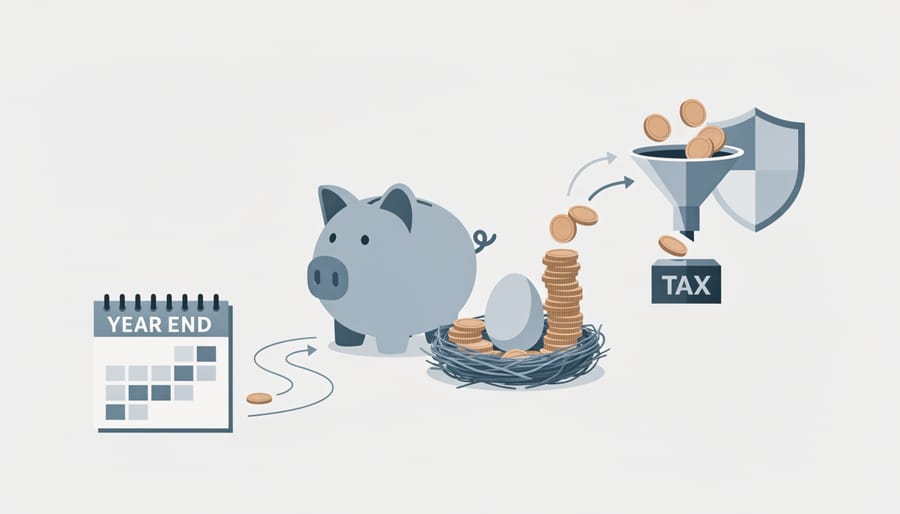
Contributing to retirement savings delivers a double win: you reduce your current taxable income while securing your financial future. As a small business owner, you can contribute to a Registered Retirement Savings Plan (RRSP) using your business income, lowering what you’ll owe in taxes this year. The contribution room you earn is based on your previous year’s income, so higher business profits create larger opportunities to shelter income from tax.
Beyond RRSPs, you might consider a Tax-Free Savings Account (TFSA) for after-tax savings that grow tax-free, though TFSA contributions don’t reduce your current tax bill. If you’ve incorporated, look into an Individual Pension Plan (IPP), which can provide even greater contribution room and tax advantages than an RRSP once your income reaches certain levels.
The key is treating retirement contributions as part of your overall tax planning, not an afterthought. Making a significant RRSP contribution before year-end can push you into a lower tax bracket, saving thousands in taxes. That money works for you twice, building retirement security while cutting your immediate tax burden. Review your contribution room and income projections now to maximize this strategic advantage.
Understanding Important Tax Deadlines
Missing critical tax deadlines can trigger penalties and interest charges that eat into your profits. While the previous section covered proactive tax planning strategies, knowing exactly when to execute them and meet your obligations keeps you compliant and protects your cash flow. Here’s what you need to mark on your calendar for 2026.
The Canada Revenue Agency publishes 2026 filing and payment deadlines that vary depending on your business structure. Self-employed individuals and business owners face different dates for filing versus payment, which creates a common trap. Your tax return might be due June 15, but any money you owe must reach the CRA by April 30 to avoid interest charges.
| Deadline Type | Date | Applies To |
|---|---|---|
| Personal tax filing | April 30, 2026 | Employees, non-business income earners |
| Self-employed filing | June 15, 2026 | Business owners, sole proprietors |
| Payment deadline | April 30, 2026 | All taxpayers with balances owing |
| Instalment payments | March 15, 2026 | Taxpayers required to pay by instalment |
Notice the payment deadline stays fixed at April 30, regardless of when you file. If you’re self-employed and wait until mid-June to file, you’ll already owe daily compound interest on any unpaid balance from May 1 onward. This makes estimating your tax liability early in the year essential, not optional.
Instalment payments deserve special attention. If you owed more than $3,000 in taxes for both the current and either of the two previous years, the CRA expects quarterly instalments. Missing the March 15 deadline starts the interest clock ticking before your tax year even closes.
Set reminders at least two weeks before each deadline to give yourself time to gather documents, resolve questions, and arrange payment. Treating these dates as firm commitments, not suggestions, prevents the stress and financial drain of penalties that could have funded business growth instead.
Working with Professional Support
Navigating tax planning alone can feel overwhelming, especially when you’re already managing daily operations, payroll, and growth. A qualified bookkeeper or tax professional brings specialized knowledge that pays for itself through discovered savings, avoided penalties, and time you get back to focus on revenue-generating activities.
Professional support helps you spot opportunities you might miss, from claiming overlooked deductions to structuring transactions in the most tax-efficient way. A bookkeeper who understands your industry can catch errors before they become costly, ensure your records meet CRA standards, and provide clear financial reports that inform smarter business decisions. Tax professionals stay current on changing regulations and can advise on complex situations like incorporation, capital asset purchases, or hiring your first employee.
Family Business Services offers a national network of experienced professionals who specialize in supporting Canadian small business owners, farmers, and tradespeople. Our affordable bookkeeping services keep your records organized year-round, making tax time straightforward rather than stressful. We help identify tax-saving strategies throughout the year, not just in December, so you can act when opportunities arise. Our team understands the realities of running a small business and provides practical, jargon-free guidance tailored to your situation.
Think of professional support as an investment that protects your bottom line. The cost of quality bookkeeping and tax advice is modest compared to the savings uncovered, the penalties avoided, and the peace of mind gained knowing your tax planning is handled correctly.
Building a Year-Round Tax Planning Habit
The most effective tax planning for small business happens every month, not just in December. When you build a few simple habits into your regular routine, you avoid year-end scrambling and reduce the risk of missing valuable deductions.
Start by organizing your records as you go. Set up a digital system where receipts, invoices, and expense records are captured immediately rather than piled in a drawer. Most smartphone apps let you snap photos of receipts that sync automatically with your bookkeeping software, making the process nearly effortless.
Track your business expenses monthly instead of waiting until tax time. A quick 30-minute review each month keeps your records current and helps you spot deductible expenses you might otherwise forget. This monthly check-in also reveals spending patterns that can inform better business decisions throughout the year.
A few practical habits make this ongoing approach manageable:
- Photograph receipts with your phone immediately after purchases and file them in a cloud folder
- Log mileage after every business trip while the details are fresh
- Review your bank and credit card statements quarterly to catch any missed deductions
- Set calendar reminders for estimated tax payment deadlines to avoid interest charges
Set aside a percentage of your income each month for taxes. Many small business owners struggle with the April 30 payment deadline because they spent the money throughout the year. Opening a separate savings account and transferring 20 to 30 percent of income regularly prevents unpleasant surprises.
Schedule quarterly conversations with your bookkeeper or tax advisor. These short check-ins throughout the year help you adjust strategies as your business evolves, catch potential issues early, and make year-end planning sessions far more productive. When December arrives, you’ll have clean records and a clear picture of where you stand.
Effective tax planning for small business owners isn’t a once-a-year scramble, it’s a combination of strategic year-end moves and consistent habits that build financial strength throughout the year. The strategies you’ve learned here can make a real difference to your bottom line, but only if you act on them.
You don’t have to navigate tax complexity alone. Family Business Services offers affordable bookkeeping and professional tax advice through our national network, giving you access to experts who understand the unique challenges facing Canadian entrepreneurs, farmers, and tradespeople. We help you identify savings opportunities, stay compliant, and plan ahead with confidence.
Focus your energy on growing your business. Let professionals handle the tax details, so you can keep more of what you earn.