 darin
darin The matching principle matches expenses with the revenues they helped generate in the same accounting period. This fundamental bookkeeping concept ensures your financial statements accurately reflect your business performance by recording costs at the same time you record the income they produced, rather than simply when money changes hands.
For Canadian small business owners, understanding how the matching principle works in practice makes the difference between financial records that tell a clear story and ones that mislead. When you pay for inventory in November but sell it in January, or when you receive payment in December for services you’ll deliver in March, the matching principle guides where those transactions belong in your books.
Getting this right matters more than many entrepreneurs realize. Mismatched expenses and revenues can make profitable months appear unprofitable, trigger unnecessary tax complications, and prevent you from seeing your true financial position when making critical business decisions. The principle applies whether you run a contracting business tracking project costs, operate a retail shop managing seasonal inventory, or provide services with upfront payments.
The good news is that applying the matching principle becomes straightforward once you understand the core logic. Our national network of professional bookkeepers helps small businesses across Canada implement this principle correctly, providing cost-effective support that protects your financial accuracy without the expense of a full-time accountant.
What the Matching Principle Actually Means

The matching principle is simpler than it sounds. It’s an accounting rule that says your business expenses should show up in your financial records during the same period as the revenue those expenses helped you earn. Think of it as pairing your costs with the income they produced, rather than recording them based on when cash changed hands.
Here’s why this matters. Let’s say you run a small manufacturing business and you buy $5,000 worth of materials in December to fill orders you’ll deliver in January. Under the matching principle, you’d record that $5,000 expense in January when you recognize the revenue from those sales, not in December when you paid for the materials. This approach gives you a true picture of your profit for each period.
The principle applies to all sorts of expenses. If you pay for a year of insurance upfront, you spread that cost across twelve months instead of recording it all at once. If you hire contractors to complete a project that generates revenue in March, their fees get recorded in March too, even if you don’t pay them until April.
This method differs from cash-basis accounting, where you record transactions when money moves. While cash-basis is simpler, it can make your business look more or less profitable than it really is during any given month. The matching principle connects to broader accounting standards like IFRS basics which many Canadian businesses follow for consistent financial reporting.
For small business owners, understanding this principle helps you see your actual profitability and make smarter decisions about pricing, spending, and growth.
How the Matching Principle Works in Your Business

Let me show you how the matching principle plays out in the everyday operations of Canadian small businesses.
If you run a farm and sell grain in October 2026, you need to record the fertilizer and seed costs from spring in that same October period. You spent $15,000 on inputs in March, but that expense belongs with the harvest revenue, not with March’s financial picture. The timing of your cash payment is irrelevant; what matters is when those inputs contributed to generating income.
For a contractor finishing a home renovation, the matching principle works the same way. You buy lumber and drywall in July, but the client pays you in September when the job completes. Those material costs match the September revenue, even though your supplier invoice arrived weeks earlier. Recording the lumber expense in July and the project revenue in September would misrepresent both months.
Here are common situations where you need to match expenses with revenues:
- Inventory purchases: match the cost when you sell the item, not when you buy it
- Contractor costs: record subcontractor payments with the project revenue they helped create
- Advertising expenses: match campaign costs to the sales period they generate, not the payment date
- Equipment usage: spread the cost over time as the equipment helps produce revenue
Consider an entrepreneur who pays $3,000 in January for a year-long software subscription that supports customer sales. The matching principle requires spreading that $3,000 across twelve months at $250 per month, aligning each portion with the revenues it helps generate throughout the year.
A maple syrup producer taps trees in February, processes syrup in March, but sells the bulk of production at summer farmers’ markets. The tapping supplies, fuel, and bottling costs all match the summer sales revenue, regardless of when the credit card statement arrived. This gives you an accurate picture of what each batch of syrup actually cost to produce and sell.
The principle applies whether you receive payment immediately or months later. A tradesperson who invoices a commercial client in November for work that won’t be paid until January 2027 records both the revenue and the associated material costs in November. The matching happens in the period when you earned the income, not when cash changes hands.
When Revenue and Expenses Don’t Match: Common Problems
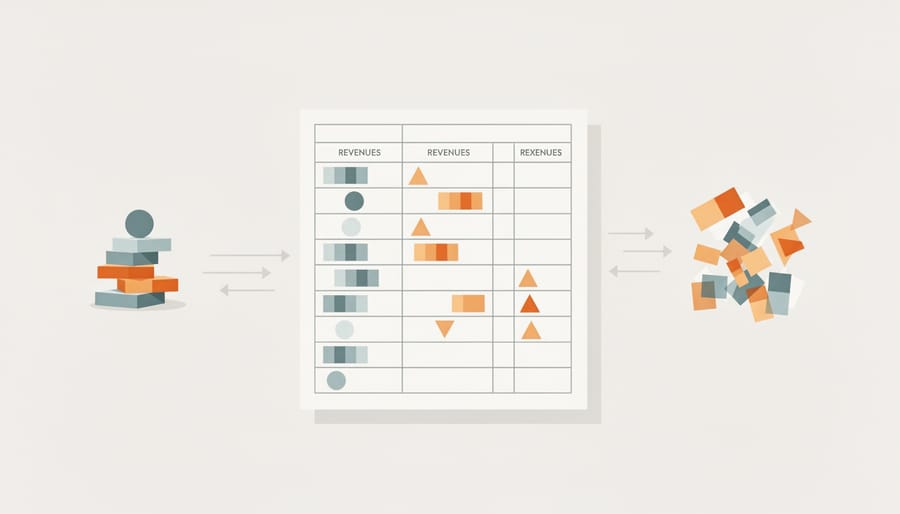
When your expenses land in one period and the revenues they generated show up in another, your financial picture becomes dangerously distorted. A construction contractor who buys materials in December but records the project revenue in January appears unprofitable in December and artificially profitable in January. Neither month reflects reality.
This timing disconnect creates immediate tax headaches. You might pay taxes on revenue without claiming the expenses that produced it, inflating your tax bill unnecessarily. Or you claim expenses without matching revenue, triggering scrutiny from the Canada Revenue Agency when your numbers don’t align logically. Either scenario costs you money or invites unwanted attention.
Inaccurate financial statements are perhaps the bigger trap. When your profit-and-loss statement shows strong sales in March but the associated costs appear in February, you can’t gauge true profitability. A farmer who expenses feed purchased in autumn but records livestock sales in spring sees wildly fluctuating monthly results that hide the actual margin per animal. Those swings make it impossible to spot genuine problems or confirm what’s working.
Poor business decisions follow naturally from bad data. You might expand when your books suggest profitability that doesn’t actually exist, or cut back during a period that looks weak only because expenses and revenues fell out of sync. A tradesperson who sees high revenue one month and low revenue the next might hire or lay off workers based purely on accounting artifacts rather than real business trends.
Cash flow confusion multiplies the mess. When recorded profits don’t match actual cash position because timing is off, you can’t plan payments, negotiate with suppliers, or make confident purchasing decisions. You’re flying blind, making critical choices based on numbers that misrepresent your business fundamentals.
Simple Steps to Apply the Matching Principle
Start by identifying when you actually earned revenue, not just when cash came in. Record sales when you deliver goods or complete services, even if payment arrives later. This timing becomes your anchor for matching expenses.
- Identify the period when you earned the revenue. Look at delivery dates, service completion, or project milestones rather than invoice dates.
- Track all expenses directly connected to generating that revenue. Include materials purchased, labour costs, and any other resources consumed to make the sale.
- Record both the revenue and related expenses in the same accounting period. If you earned revenue in March, the costs that produced that revenue belong in March too.
- Verify the alignment by reviewing your monthly reports. Check that each period shows revenues alongside the expenses that created them.
Your accounting software can automate much of this process. Set up your system to track inventory costs, assign project expenses, and link purchases to specific jobs or sales orders. The software handles the mechanical work of posting entries in the correct period once you establish the rules.
Pay attention to prepaid expenses and accruals. When you pay six months of insurance upfront, split that cost across the six months it covers. When you receive supplies in December but the invoice arrives in January, record the expense in December if that’s when you used the materials.
For revenue recognition establish clear criteria that define when a sale counts as earned. A farmer selling grain earns revenue when the grain gets delivered and weighed, not when the cheque arrives weeks later. A contractor earns revenue as project phases complete, not at the final payment.
Review your books monthly rather than waiting until year-end. Catching mismatches early means simple corrections instead of major adjustments that throw off your whole year. Small fixes keep your financial picture accurate and your tax planning reliable.
Getting Professional Help with the Matching Principle
Many small business owners understand the matching principle in theory but struggle to apply it consistently in their day-to-day bookkeeping. That’s where professional support makes the difference between accurate financial statements and costly mistakes.
Working with a financial consultant or experienced bookkeeper ensures your expenses get recorded in the same period as the revenues they helped generate. These professionals know how to handle prepaid expenses, depreciation schedules, and accrued costs without the guesswork. They’ll set up systems that automatically match your costs to the right accounting periods, so you don’t have to worry about whether that insurance payment belongs in March or spread across twelve months.
Across Canada, a national network of bookkeeping professionals offers cost-effective solutions specifically designed for entrepreneurs, farmers, and tradespeople. You don’t need a big-city firm or a massive retainer. Many accountants provide tiered services where you pay only for the support you need, whether that’s monthly reconciliation, quarterly reviews, or year-end preparation.
The right professional help does more than keep your books balanced. It minimizes your tax burden by ensuring deductions land in the optimal periods and prevents CRA complications from mismatched revenues and expenses. Instead of spending hours second-guessing your entries, you can focus on running your business while experts handle the matching principle correctly.
Getting the matching principle right isn’t about perfection, it’s about giving yourself accurate information to run your business confidently. When your books properly match expenses with the revenues they generate, you see the real story behind your numbers. That clarity helps you plan purchases, manage cash flow, and make decisions that move your business forward.
You don’t need to tackle this alone. Professional bookkeepers across Canada understand how the matching principle applies to your specific industry and can set up systems that work for your operation. With expert support handling the technical details, you free up time to focus on what you do best: growing your business and serving your customers.